
Introduction
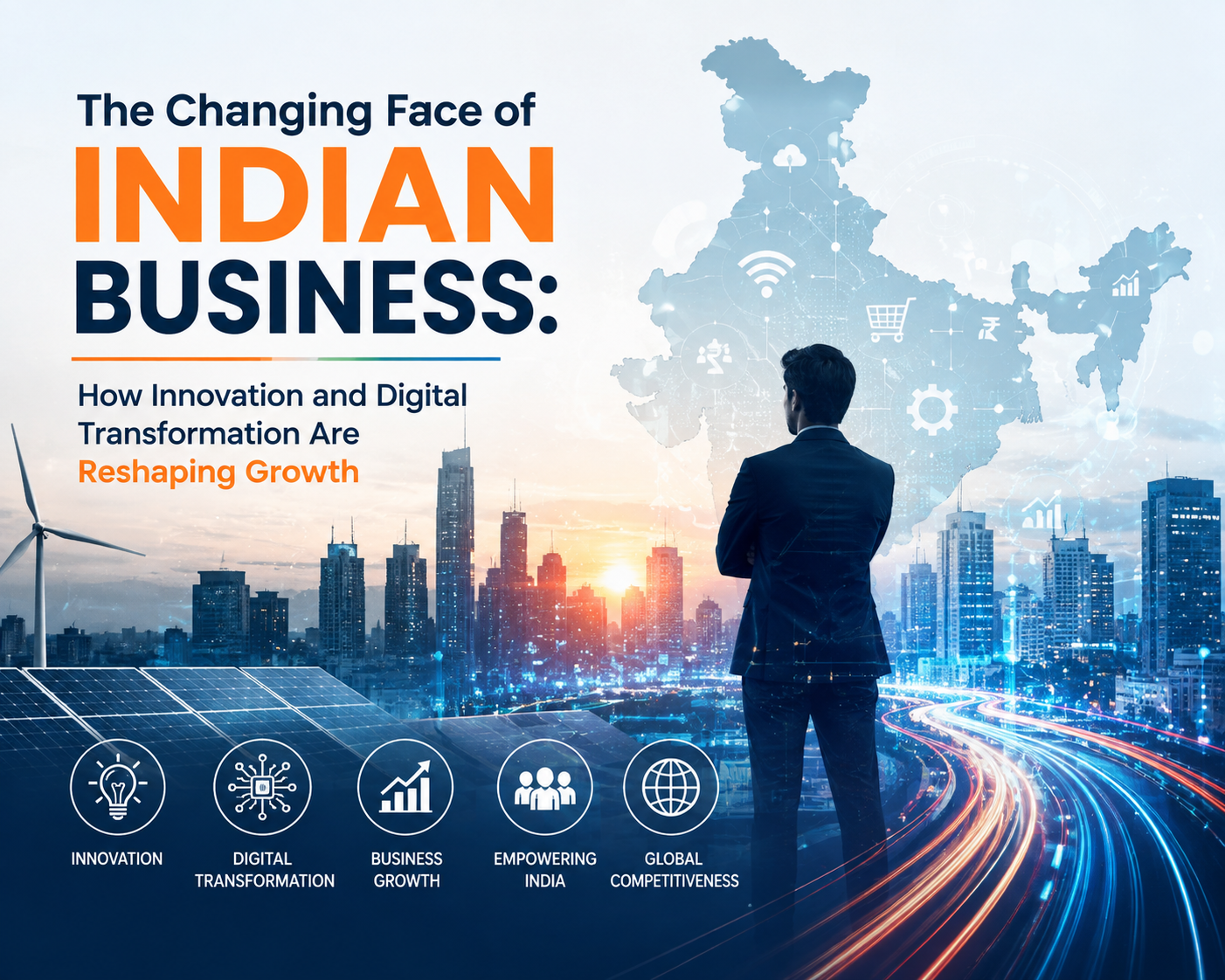
India’s business landscape is undergoing a significant transformation. Over the past decade, technological advancement, changing consumer expectations, digital infrastructure and a growing entrepreneurial ecosystem have changed the way companies operate and compete. Businesses that once depended primarily on physical locations, traditional advertising and established distribution networks are increasingly adopting digital platforms, data-driven decision-making and technology-enabled services.
This transformation is not limited to large corporations. Small businesses, family-owned enterprises, emerging brands and new-age companies are also using technology to reach customers, streamline operations and build competitive advantages. As India continues to strengthen its position as one of the world’s major economic markets, innovation is becoming an increasingly important factor in determining which businesses succeed.
Digital Transformation Is Becoming a Business Necessity
Digital transformation has moved beyond being an optional strategy. For many businesses, it has become essential for remaining relevant in a rapidly changing market. Companies are adopting cloud computing, artificial intelligence, automation, analytics and digital payment systems to improve efficiency and customer experience.
Retailers, for example, can combine physical stores with online platforms to serve customers across multiple locations. Manufacturers can use automation and real-time monitoring to improve production processes. Service businesses can use digital tools to manage customer relationships, communication and payments.
The result is a more connected business environment in which technology is becoming part of everyday operations rather than remaining limited to specialised departments.
Consumers Are Driving the Change
One of the biggest forces behind business transformation is the modern consumer. Customers today expect convenience, speed, transparency and personalised experiences. Digital platforms have made it easier for consumers to compare products, read reviews, communicate with brands and make purchases from almost anywhere.
Businesses therefore have to understand not only what customers buy but also why they make particular purchasing decisions. Data analytics has become increasingly useful in this area, allowing companies to identify consumer patterns and make more informed decisions.
The shift has also increased competition. A customer who is dissatisfied with one brand can often discover several alternatives within minutes. This has encouraged businesses to focus more closely on service quality, product innovation and customer engagement.
The Rise of Entrepreneurship
India’s entrepreneurial ecosystem has also contributed significantly to the changing business environment. Startups have entered sectors ranging from financial services and healthcare to education, logistics, food delivery and technology.
Many young entrepreneurs are addressing problems that were previously considered difficult to solve at scale. Digital infrastructure has lowered several traditional barriers to entering the market, allowing businesses to reach customers without establishing large physical networks.
At the same time, entrepreneurship is becoming more accessible beyond major metropolitan cities. Tier-II and Tier-III cities are increasingly producing entrepreneurs who are building businesses around regional requirements, local industries and emerging consumer markets.
Innovation Beyond Technology
Innovation is often associated with advanced technology, but successful businesses are innovating in many other areas as well. Companies are experimenting with new business models, subscription services, direct-to-consumer strategies, sustainable products and community-driven marketing.
For some businesses, innovation means finding a more efficient way to deliver an existing service. For others, it means creating an entirely new category. The common factor is a willingness to question traditional approaches and adapt to changing circumstances.
This is particularly important in competitive markets where simply offering a good product may not be enough. Businesses increasingly need to provide a complete customer experience that differentiates them from competitors.
Sustainability Is Entering Business Strategy
Sustainability is another factor influencing corporate decision-making. Consumers, investors and regulators are paying greater attention to environmental and social considerations. As a result, businesses are examining their supply chains, packaging, energy consumption and resource utilisation.
Sustainable practices can also create operational benefits. Reducing waste, improving energy efficiency and using resources more effectively can help companies lower costs while reducing their environmental impact.
For many organisations, sustainability is gradually moving from a corporate social responsibility activity to a broader component of long-term business strategy.
The Importance of Adaptability
The pace of change means that businesses cannot rely indefinitely on strategies that worked in the past. Markets can shift quickly because of technological developments, economic conditions, consumer behaviour or global events.
Adaptability has therefore become one of the most valuable organisational capabilities. Businesses that monitor market changes, invest in employee skills and remain open to experimentation are often better positioned to respond to uncertainty.
Leadership also plays an important role. Digital transformation and innovation require more than purchasing technology. They require changes in organisational culture, decision-making and employee capabilities.
Conclusion
India’s business environment is entering an increasingly dynamic phase. Digital transformation, entrepreneurship, changing consumer behaviour, sustainability and innovation are collectively reshaping how companies create and deliver value.
The businesses most likely to thrive in this environment will not necessarily be those with the largest resources. They will be those capable of understanding change, responding quickly and continuously improving their products, services and operations.
As technology becomes more deeply integrated into the economy, the future of Indian business will increasingly depend on a combination of innovation, adaptability and a clear understanding of customer needs.